

The Diagnostic Delay is not just a Feeling. It is a Statistical Fact.
By Whuman Health
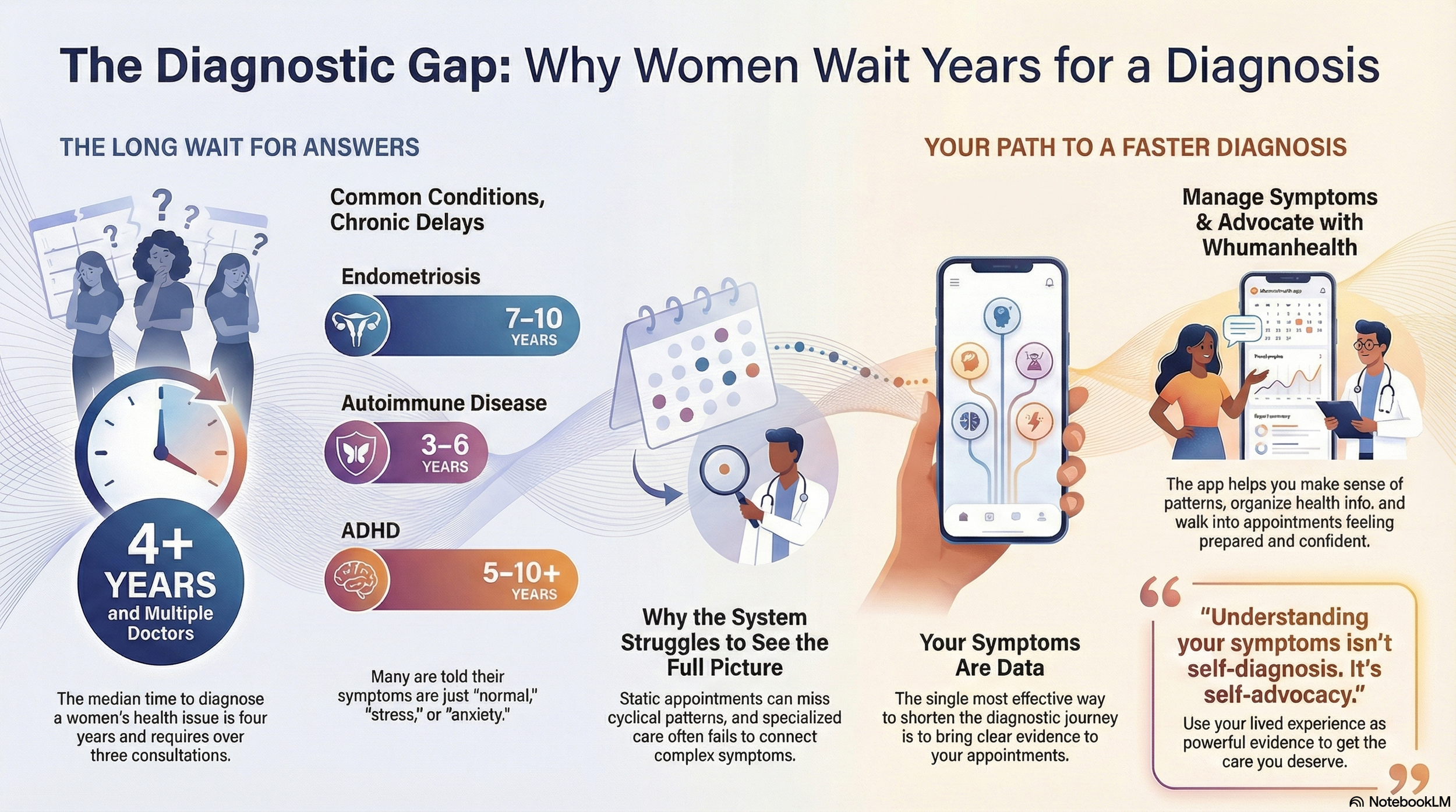
The Silent Reality: Women Are Diagnosed Later — or Not at All
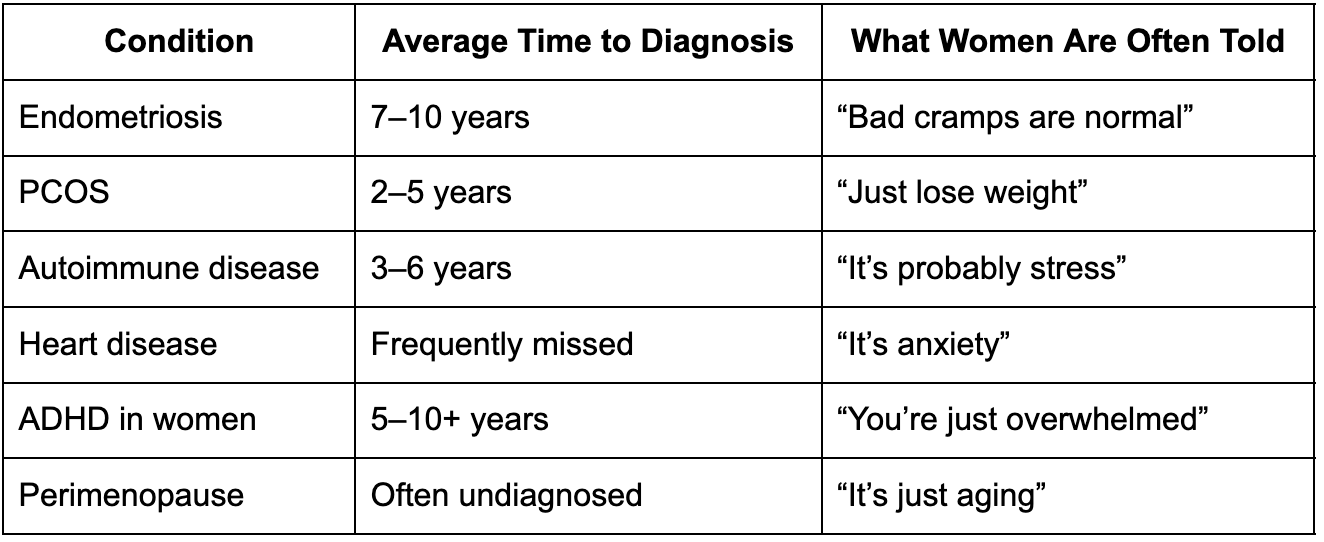
Below is the table highlighting some of the most common women’s health conditions that are frequently missed or misdiagnosed. Unfortunately, these data come from only a handful of population studies focused on specific women’s health conditions—underscoring how limited and fragmented the research still is.
“The problem isn’t that women don’t speak up. It’s that the system doesn’t listen well.”
Why This Keeps Happening
Women’s Bodies Are Dynamic — Appointments Are Not
Women’s health changes with:
Hormonal cycles
Pregnancy and postpartum
Perimenopause and menopause
But most appointments capture one snapshot in time. If your labs look “normal” that day, your lived experience may be dismissed—even if symptoms repeat every month.
Our Physiology and Symptoms Are Complex — The System Is Fragmented
Many women don’t show up with “just one thing.”
We show up with:
Fatigue + pain
GI issues + cycle changes
Mood shifts + brain fog + sleep problems
Healthcare is organized by specialty. Women experience their bodies as systems.
“I wasn’t broken. The system just couldn’t see the full picture.”
The Cost of Being Diagnosed Late
Being diagnosed late comes at a real cost for women. Delayed diagnosis often means worsening symptoms, disease progression, and fewer effective treatment options. It also takes a heavy toll on mental health, leading to anxiety, self-doubt, and medical trauma from repeated dismissal. In fact, many women start questioning themselves before questioning the system.
The financial strain adds up too—years of appointments, testing, and missed work, all while losing precious time and quality of life. Perhaps most damaging, late diagnosis erodes trust—causing women to normalize pain and adapt their lives around symptoms instead of receiving the care they need. Getting answers sooner doesn’t just improve outcomes—it changes lives.
What Finally Makes a Difference: Understanding Your Own Patterns
One thing that consistently shortens the diagnostic journey is when women understand and track their symptoms—because they get answers faster.
When women arrive at appointments with:
Symptom timelines
Patterns across cycles
What’s worsening vs. improving
What they’ve already tried
Doctors can connect the dots more quickly. This is not “self-diagnosing.” It is bringing evidence into the room.
“Your symptoms are signals. They deserve to be taken seriously.”
Why We Built Whuman Health
Women should not have to compensate for the systemic bias, but until the system fully catches up, leveraging tracking tools and platforms like Whuman health is a pragmatic way to close the diagnostic gap—turning lived experience into actionable clinical evidence and speeding the path to an accurate diagnosis and effective care.
The Whuman health app helps women:
Make sense of confusing symptom patterns
Understand possible underlying causes
Organize health information clearly
Walk into appointments prepared and confident
It doesn’t replace your doctor. It helps you use your appointment time better.
A Founder’s Promise
Whuman health platform is built from the belief that:
Women can become the experts on their own bodies
Knowledge shortens the path to care
Clarity leads to confidence
Confidence leads to better diagnosis
You are not “too sensitive.”
You are not “overreacting.”
You are responding to real signals from your body.
“Understanding your symptoms isn’t self-diagnosis. It’s self-advocacy.”
Your Next Step
If you’re tired of feeling dismissed, confused, or stuck in the waiting loop—start with understanding your symptoms.
Explore Whuman and turn your lived experience into clarity—so when you meet your physician, you’re no longer starting from zero.
