

Which Hormone Tests Should You Take? A Practical Guide for Women
By Whuman Health
Change is constant in women’s bodies, and one of the most powerful steps toward taking agency over our health is learning how to monitor those changes—especially our hormones. While there’s no shortage of testing options available today, it can be overwhelming to know which tests to request, when to take them, and what the results actually mean. Hormone testing can also be expensive, so having a clear goal and an action plan upfront helps narrow options, reduce unnecessary testing, and make the process more cost-effective.
The female reproductive system is a complex, dynamic network that relies on continuous communication between the brain and the ovaries—known as the Hypothalamic-Pituitary-Ovarian (HPO) axis. When this hormonal rhythm is disrupted—whether by stress, metabolic changes, or breakdowns in feedback signaling—it can lead to a wide range of women’s health challenges, from irregular periods to fertility issues.
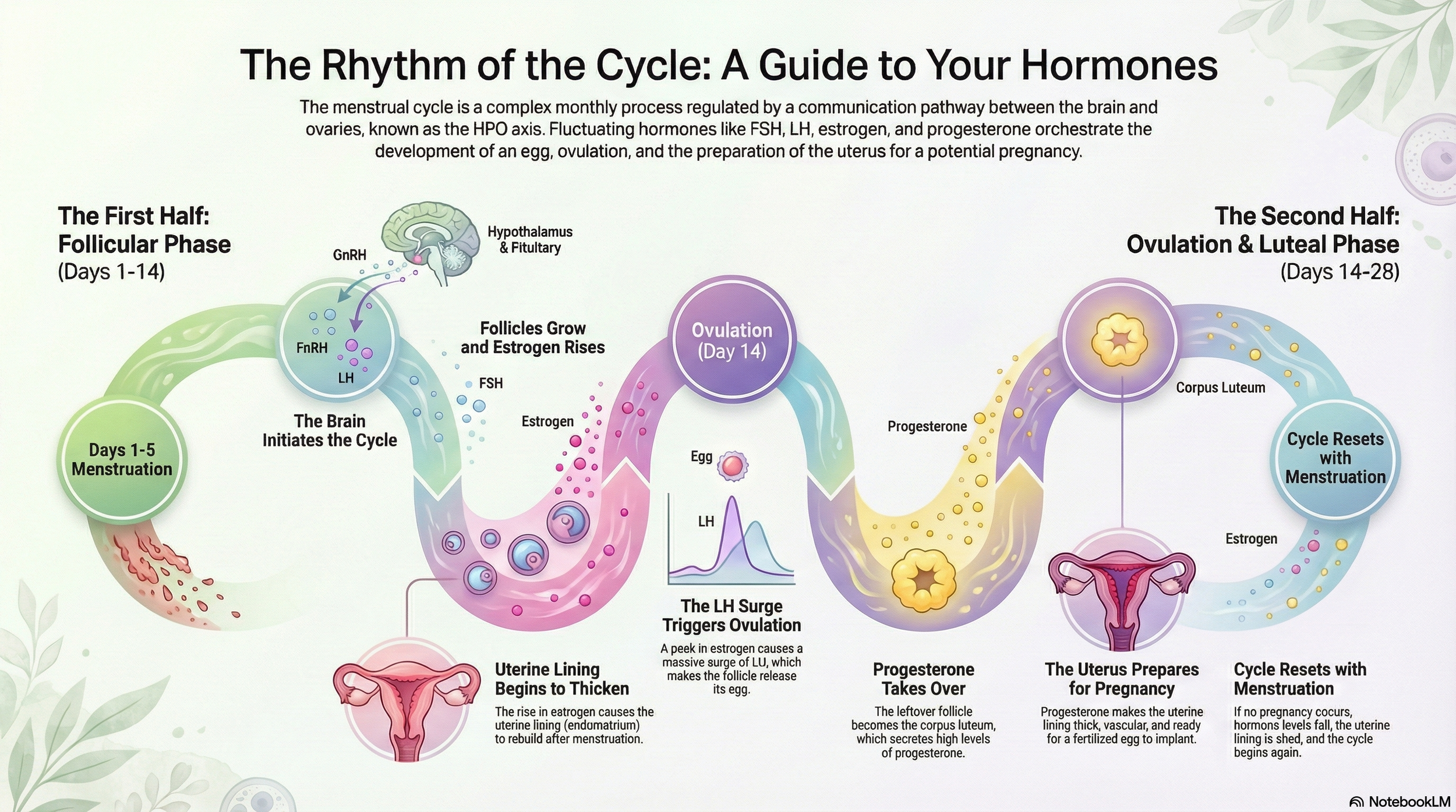
To choose the right hormonal tests, you need to understand:
What problem you’re trying to diagnose
Which hormones regulate that system
Which testing method captures meaningful information
What your “normal” is
The guide below walks through that decision-making process step by step.
Step 1: Start With the Symptom Pattern, Not the Test
Hormones operate in systems. Most women’s health concerns fall into a few predictable symptom patterns, each pointing to a different hormonal axis.
Ask first: Which system seems off?
Step 2: Match Symptoms to the Relevant Hormonal Axis
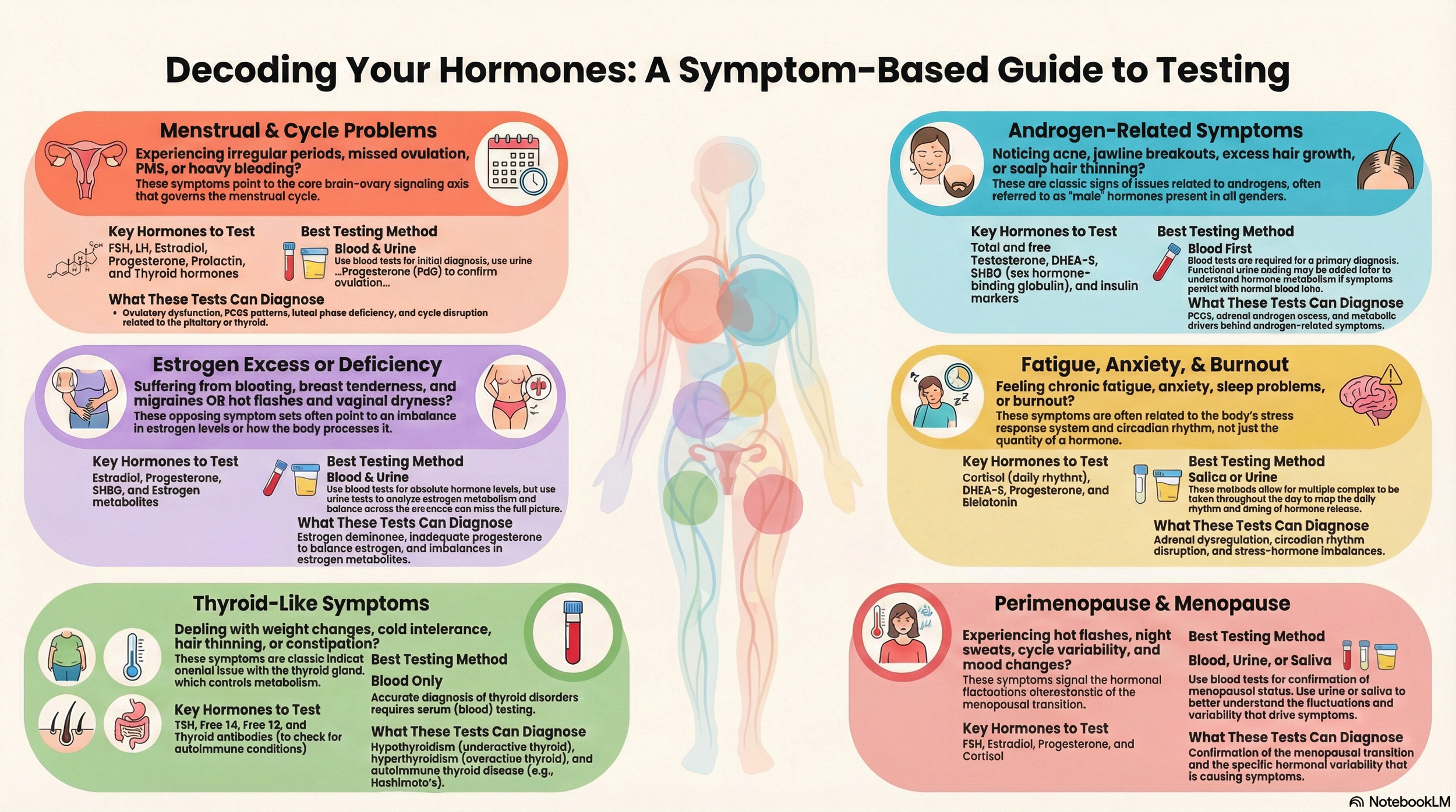
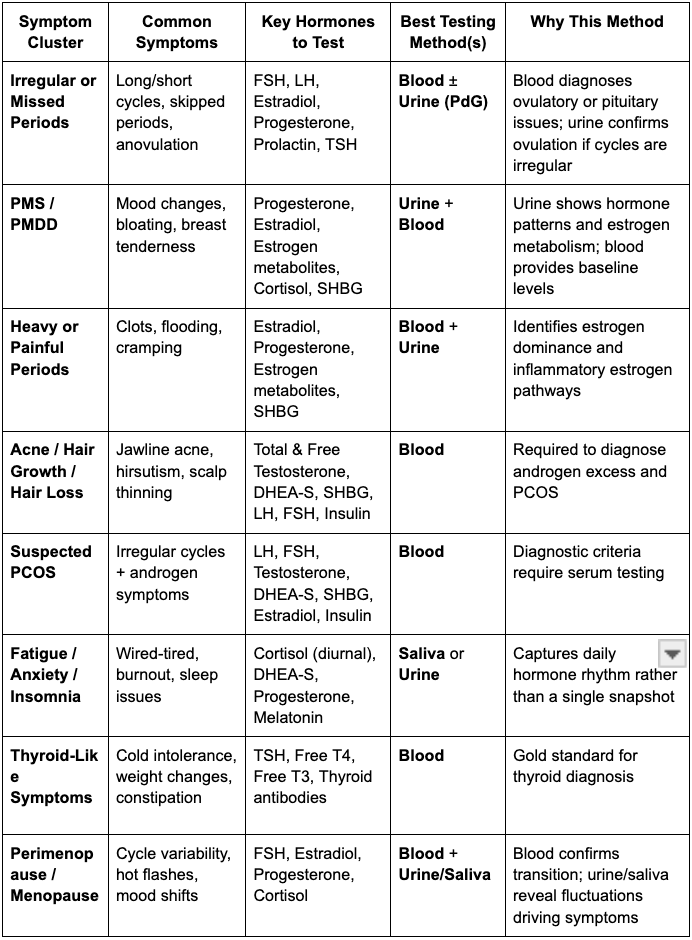
Symptoms → Hormone tests → Possible condition
Step 3: Which testing method captures meaningful information
While many hormone testing options are available through clinics and direct-to-consumer marketplaces, it’s important to understand which methods provide meaningful information—and where their limitations lie.

Step 4: Understand What Your “Normal” Is
There’s a textbook definition of a “normal” cycle—and then there’s your normal cycle. Some women naturally have longer cycles, while others ovulate earlier or later, even within what’s considered a typical cycle length. If your cycle doesn’t match the textbook definition, don’t panic. Understanding your own hormonal rhythm can offer far more insight into why you feel the way you do. It helps you manage symptoms more effectively and communicate more clearly with your doctor.
Hormones change. Your plan should evolve with them.
How Whuman Helps
Whuman helps you cut through the confusion of hormone testing by connecting your symptoms, cycle patterns, and health history to the tests that are most likely to be meaningful for you. Instead of guessing which labs to order or being overwhelmed by “normal” results, Whuman helps identify which hormone systems may be involved, when tests should be done, and what the results may actually indicate in context. By translating complex hormone data into clear insights and next-step questions, Whuman helps you show up informed, prepared, and empowered in your care.
